
Last updated August 26, 2026
Free on-site gate assessment - hinges, posts, and your LiftMaster or Nice gate operator checked before anything is quoted
The assessment is free and the quote is the invoice.
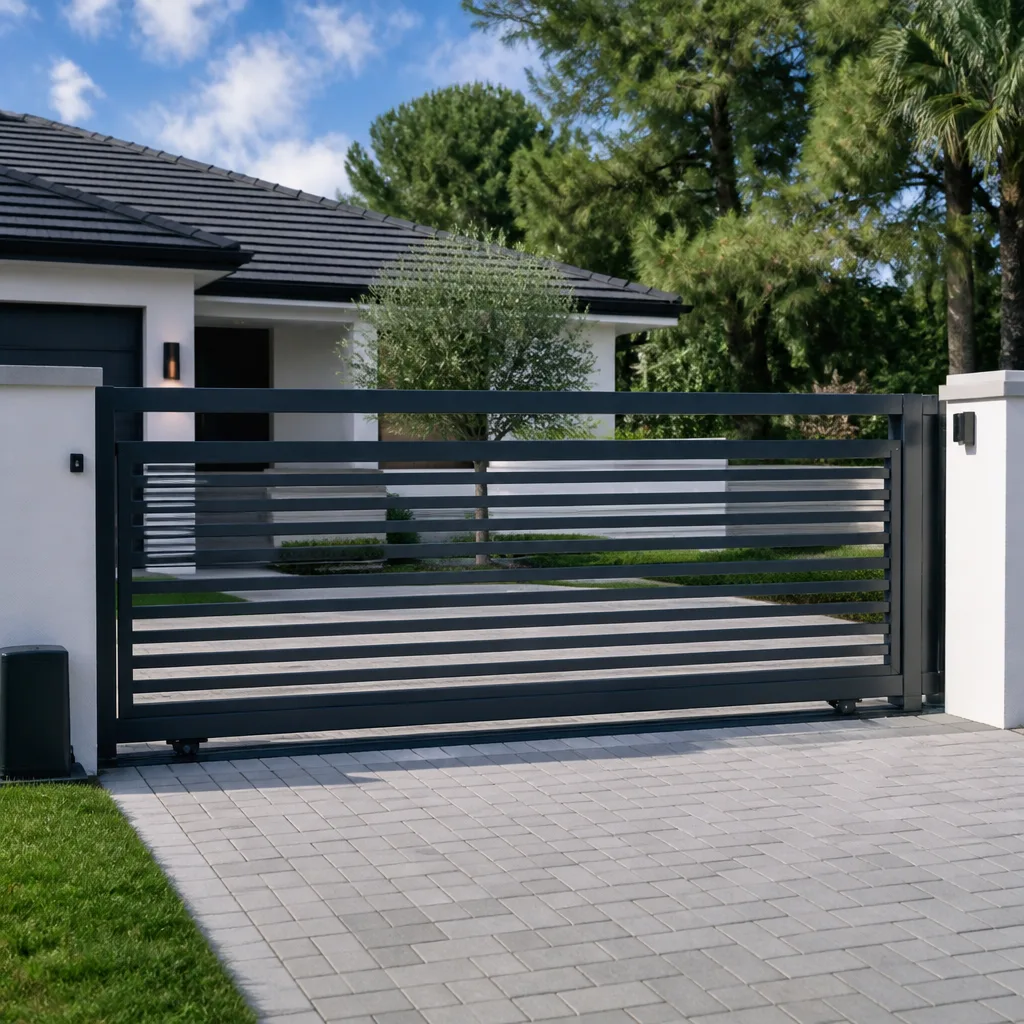
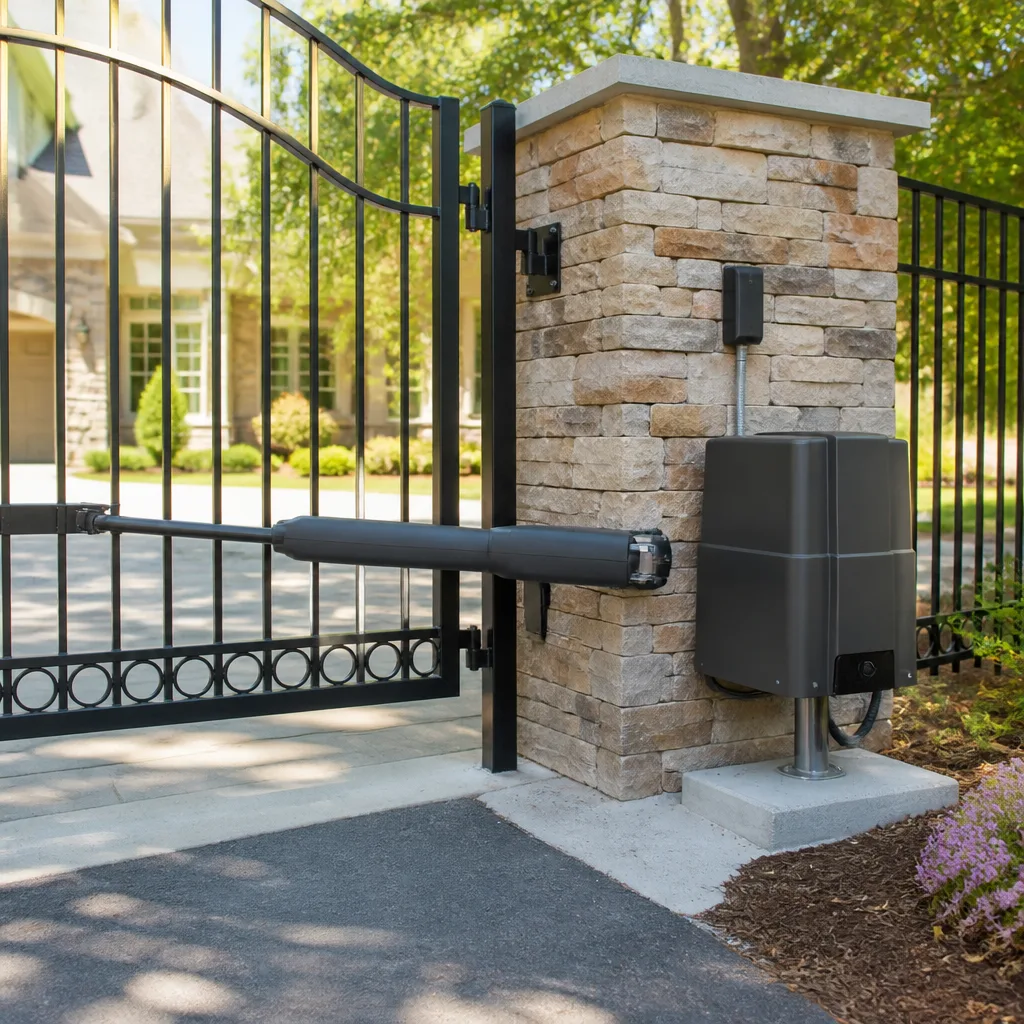
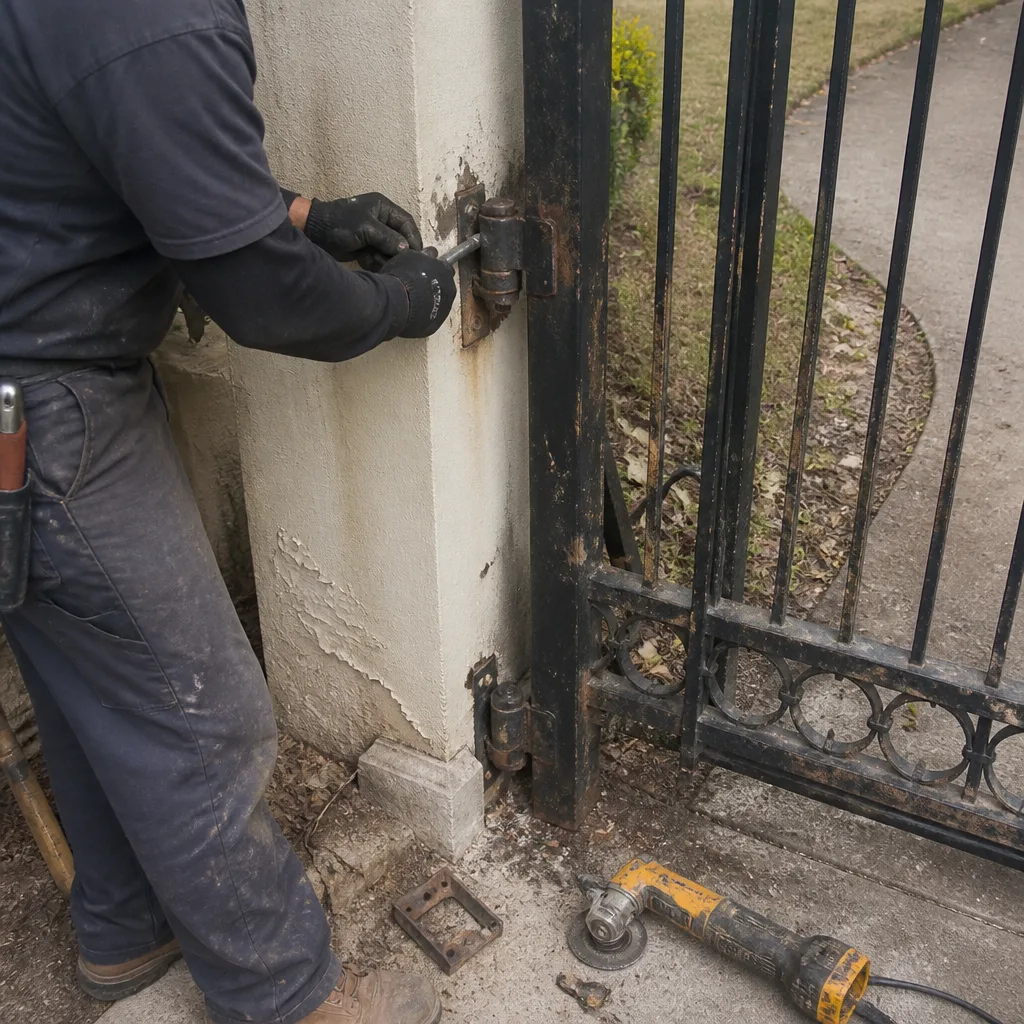 Before
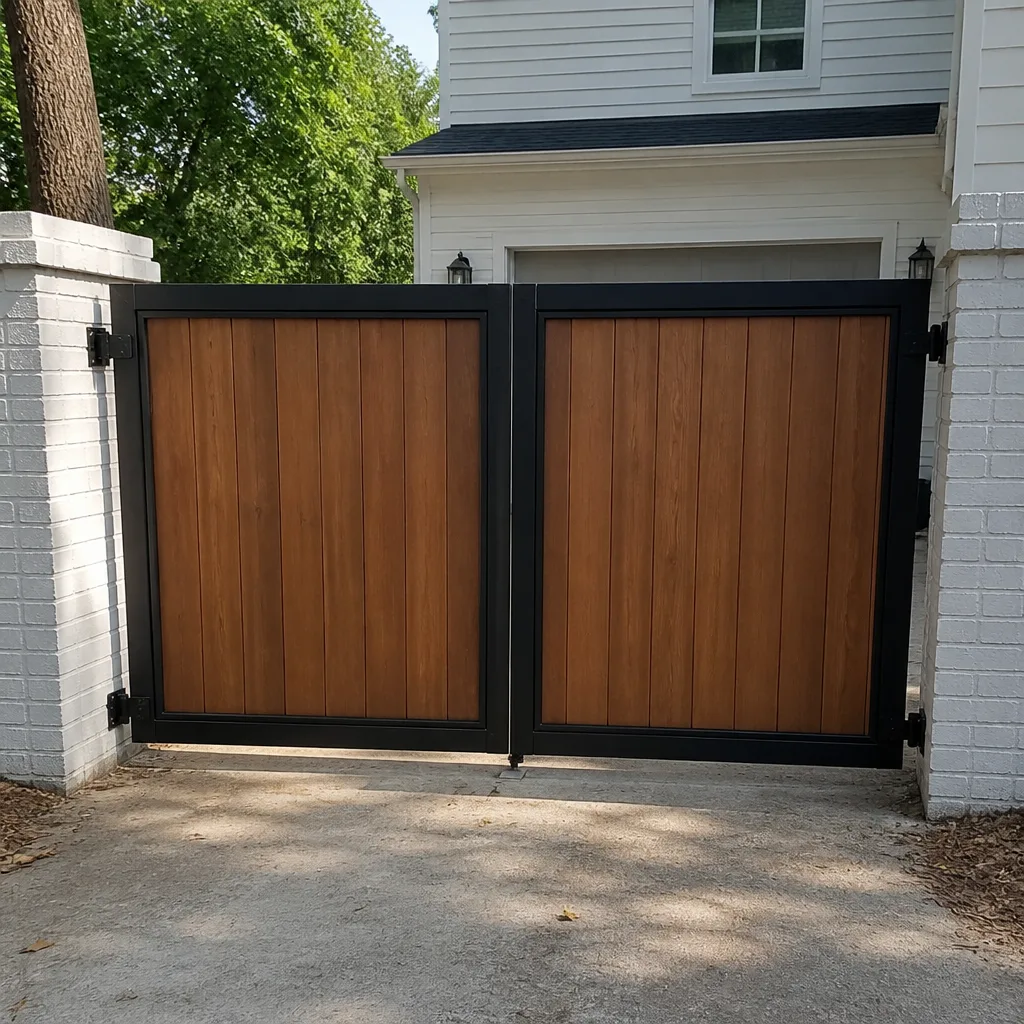 After
After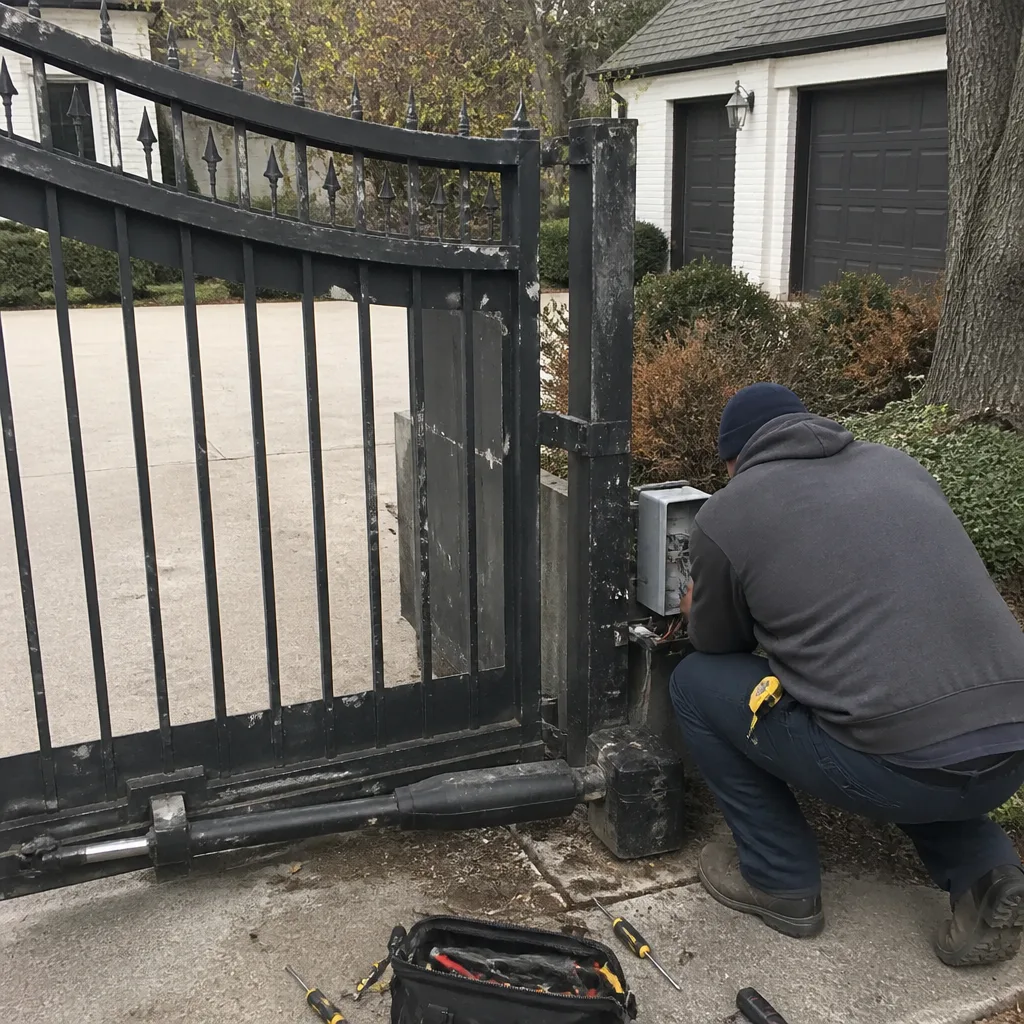 Before
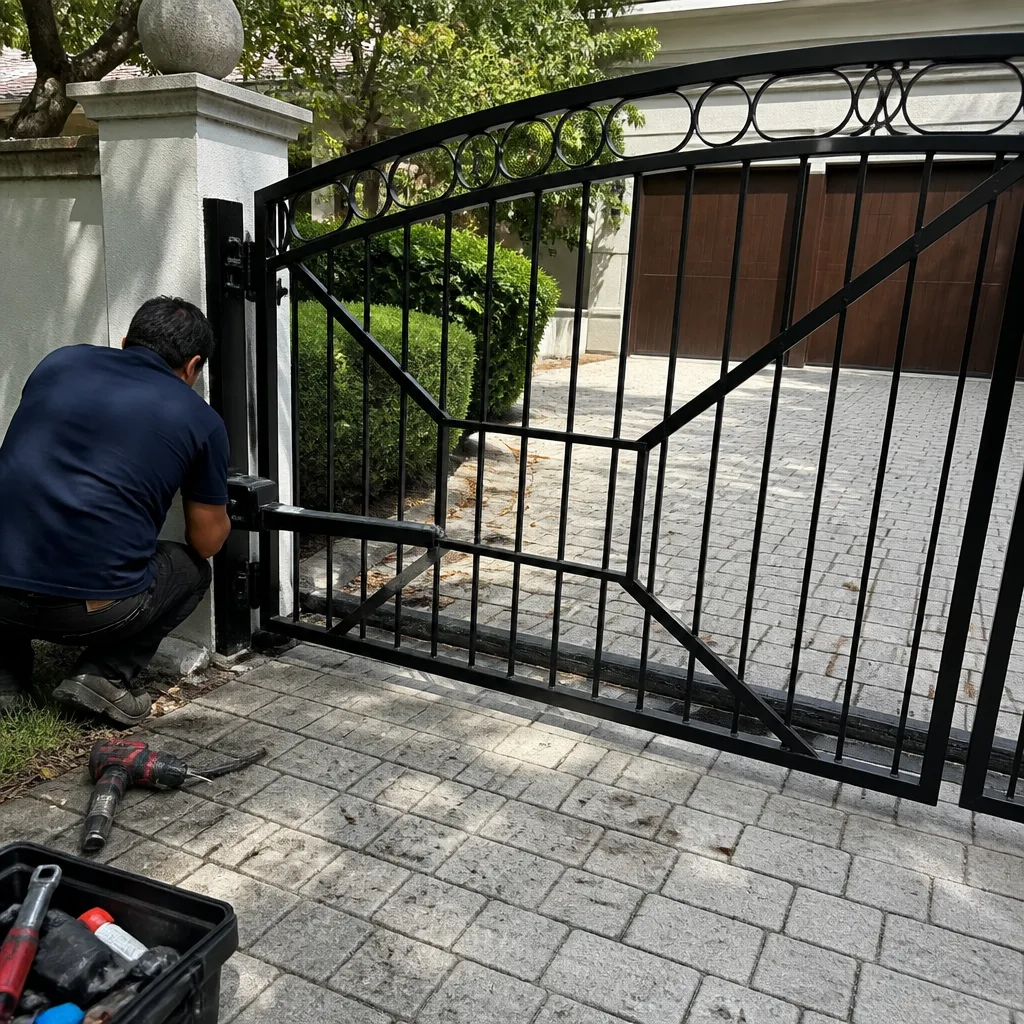 After
After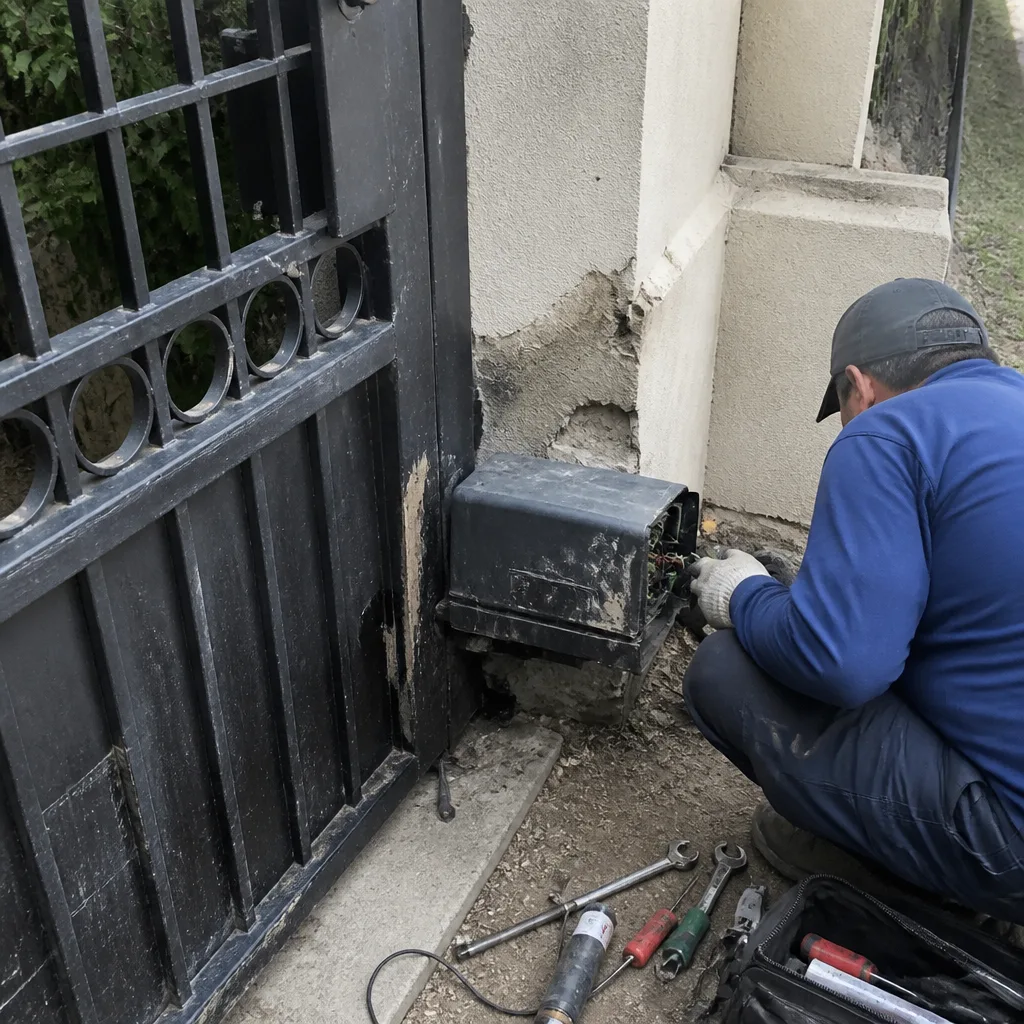 Before
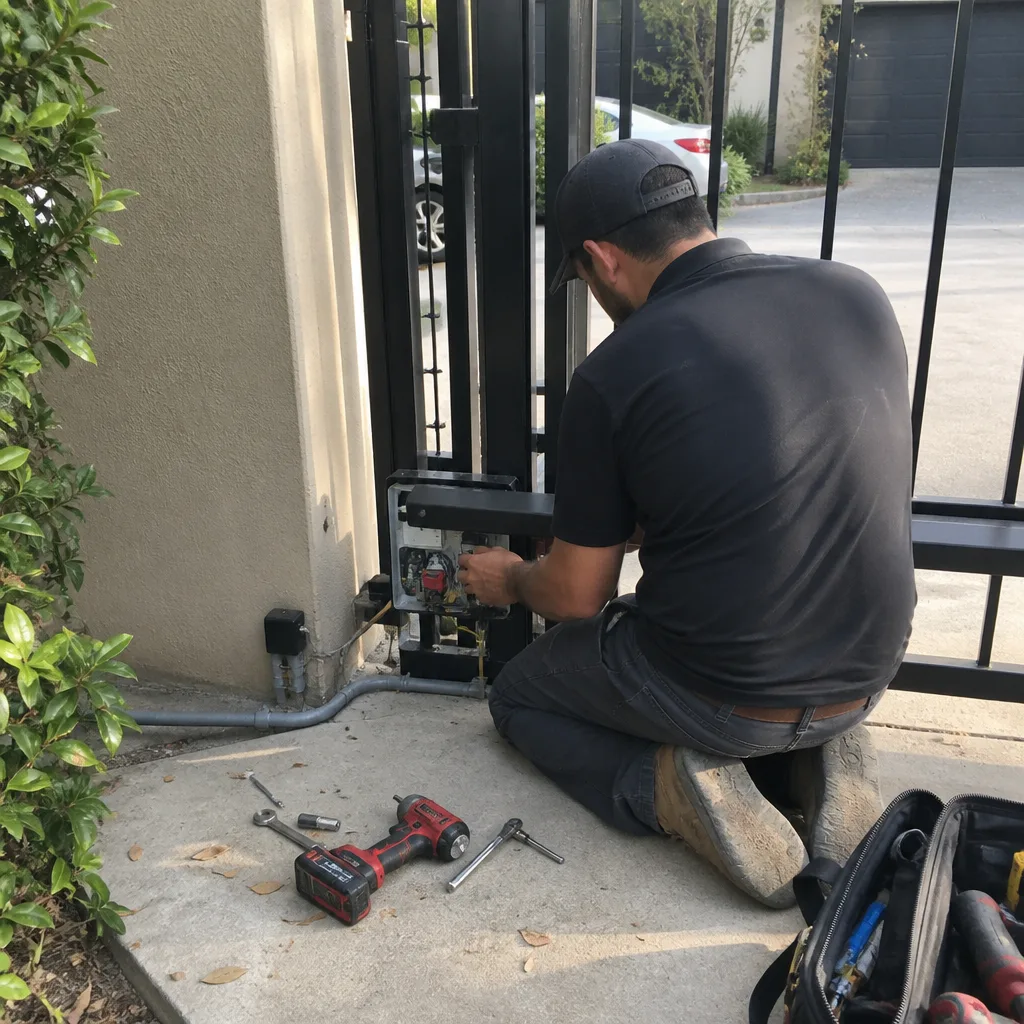 After
AfterSeasonal Gate Repair Care for Highland Park: Year-Round Homeowner’s Guide
August is when gate operators die in Highland Park. Not because the summer heat kills them instantly, but because three months of thermal expansion slowly works every loose fastener looser until something finally gives. Most people blame the operator. The real problem started in May. This guide walks you through what the North Texas climate actually does to iron, steel, wood, and aluminum gates month by month, so you can fix things at the right time instead of standing in your driveway at 6 a.m. with a gate that won’t open and a car stuck behind it. For a deeper dive, see The Complete Guide to Gate Repair in Highland Park.
Quick Answer
Seasonal gate care in Highland Park means treating summer heat and winter freeze-thaw as your two active maintenance seasons, and spring and fall as your repair windows. Check thermal expansion gaps and operator heat thresholds in June and July, lubricant viscosity and concrete cracks in January, and do a full alignment and weld inspection every March and October. A gate that gets twenty minutes of attention four times a year will outlast a gate that gets ignored for five years and then needs a full replacement.
Table of Contents
- Why Highland Park Has Two Hard Seasons, Not Four
- January & February: The Freeze-Thaw Damage Window
- March & April: The Post Movement Hazard
- May & June: Thermal Expansion Starts Working
- July & August: Operator Heat Thresholds and Weld Fatigue
- September & October: The Second Alignment Season
- November & December: Pre-Winter Lubrication and Battery Checks
- The Seasonal Gate Log: How to Spot Patterns Before They Become Failures
- Common Mistakes to Avoid
- When to Call a Professional
- Frequently Asked Questions
- The Bottom Line
Why Highland Park Has Two Hard Seasons, Not Four
Highland Park doesn’t get a gentle autumn or a mild spring. What we get is a long, punishing summer that runs from May through September, and a winter that swings between freezing nights and sixty-degree afternoons sometimes in the same week. Both of those conditions do specific things to gate hardware, and they do them differently depending on whether your gate is iron, steel, aluminum, or wood.
Summer heat in Highland Park regularly pushes surface temperatures on dark iron gates past 140 degrees. Steel expands, but it doesn’t expand evenly. A gate panel made of welded steel will grow slightly in every direction, and the fasteners holding the hinges, the operator arm, and the latch plates will take that stress. Aluminum expands roughly twice as much as steel for the same temperature rise, which is why aluminum gates in Highland Park get noticeably tighter at the latch in August and looser in January. Wood gates don’t expand much, but they dry out, shrink, and lose the structural integrity at the hinge mounts where the screws bite in.
Winter is the opposite problem. When water gets into a hairline crack in a gate column or a concrete pier and the temperature drops below freezing, that water becomes ice and expands with enough force to split concrete. Five freeze-thaw cycles in one Highland Park winter can turn a hairline crack into a structural failure. We’ve seen gate posts that leaned half an inch in October lean two inches by March, not because anything hit them, but because water and ice did the work.
So the calendar that matters here isn’t spring, summer, fall, winter. It’s this: hard season, repair window, hard season, repair window. If you schedule your gate maintenance around that rhythm, you’ll catch problems when they’re cheap to fix.
January & February: The Freeze-Thaw Damage Window
What’s happening to your gate: North Texas winters are wet-freeze-thaw cycles more often than they are deep freezes. Highland Park gets enough winter rain to saturate the soil around gate posts, then enough freezing nights to turn that water into ice. The ground heaves, the concrete around the post gets squeezed, and any crack that was already there gets a little bigger.
What to check in January and February:
- Post plumb: Put a level on each gate post. If it’s off by more than a quarter inch, write it down and check again in March. If it’s moving, you want to know before the soil dries out and the post settles into a new, wrong position.
- Concrete cracks: Look at the base of each gate column and the apron concrete around the post. Any crack that’s wider than a credit card is taking on water. Seal it in spring, but mark it now.
- Hinge screws and bolts: Cold contracts metal. Screws that were snug in October can be backed out an eighth of an inch by February. Tighten them now, before the gate’s weight starts working against the slack.
- Operator arm connection points: The bracket where the operator arm attaches to the gate takes freeze-thaw stress at a single point. Check for elongation at the bolt holes. If the hole is oval instead of round, that bracket needs replacement in spring.
Lubricant behavior in cold weather: Most off-the-shelf spray lubricants thicken below 40 degrees. If your gate is moving slower in January than it was in October, and the operator sounds like it’s working harder, that’s often just lubricant viscosity. The fix is switching to a winter-weight lubricant or a dry graphite product on the track and hinges during the cold months. Don’t force the gate with WD-40 in summer weights and expect it to perform the same in January.
Battery backup in cold: Gate operators with battery backup lose capacity in cold weather. A battery that holds enough charge to run ten open-close cycles at 70 degrees might only run six at 30 degrees. If your gate has a battery backup, January is the month to test it under load. Disconnect the AC power (or trip the breaker to the operator) and run the gate through five full cycles. If it slows noticeably on cycle four or five, the battery is reaching the end of its useful life.
March & April: The Post Movement Hazard
Here’s the thing most Highland Park gate guides miss: March and April are the single highest-risk months for post movement and gate misalignment. The reason is soil moisture. Winter rain saturates the clay-heavy soil around your gate posts. The ground swells with that moisture and the post, held by the concrete pier, stays put while the surrounding soil pushes and shifts. Then the spring sun starts drying everything out, the clay contracts, and the whole assembly settles into whatever position it’s going to hold for the rest of the year.
If the post has moved during that cycle, the gate is now out of alignment, and every cycle of the operator grinds against that misalignment for the next eight months.
The March-April gate alignment checklist:
- Open the gate fully and let go halfway. It should stay roughly where you released it. If it drifts open, the post has leaned. If it drifts closed, the hinges have sagged.
- Check the gap at the latch post. The gap between the gate leaf and the latch post should be the same top to bottom. If it’s tighter at the top, the gate has sagged at the hinge. If it’s tighter at the bottom, the hinges are pulling out or the post is leaning.
- Look at the hinge weld points. On welded iron and steel gates, a slight crack at a hinge weld is often the first visible sign that the gate has been torquing against a shifted post. Any crack, even a hairline, is a repair-now item before summer heat makes the metal expand and tear the crack open.
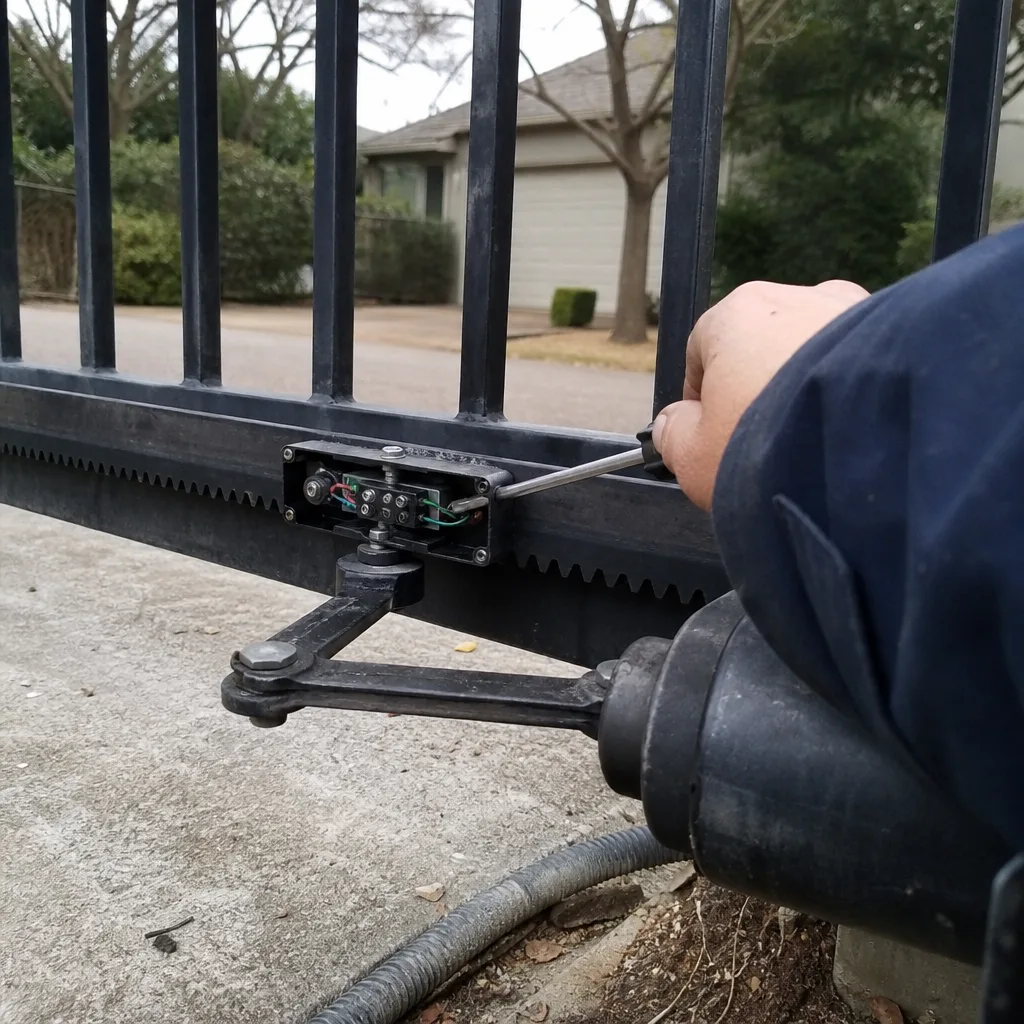
- Run the operator through a full open-close cycle and listen. A rhythmic grinding or a change in motor pitch at the same point in each cycle usually means the gate is binding against a shifted alignment.
This is also the right time to reseal any concrete cracks you flagged in January. The freeze-thaw cycle is done for the season, the concrete is dry enough to take sealant, and you want those cracks closed before the next winter’s water finds them again.
May & June: Thermal Expansion Starts Working
By May in Highland Park, ambient temperatures are hitting the high 80s and the gate surface is a lot hotter than that. Thermal expansion is now in play, and it’s working on every loose fastener from the winter. The gate panel itself, the bolts, the operator arm, the latch plate, all of it is expanding and contracting daily. Any connection that wasn’t tightened in winter is now flexing with every cycle.
What to check in May and June:
- Every accessible fastener: Hinge bolts, operator bracket bolts, latch screws, track mounting hardware. Tighten them now, in the season when loose hardware does the most damage.
- Thermal expansion gaps: Walk the length of the gate and look at every weld and every joint. A gate that expands in summer needs a little room at the latch. If the latch is binding in hot weather but worked fine in March, the gate needs a seasonal latch adjustment, not a new latch.
- Finish breakdown at weld points: Bare metal meets sun at every weld. Powder coat and paint thin out at weld seams first. Look for rust blooming at the hinge welds and the operator bracket welds. Catch it in May and a wire brush and touch-up paint fix the problem in thirty minutes. Miss it and you’re sanding through pitted metal in October.
- Wood gate hinge mounts: Dry heat means wood shrinks and screw holes open up. If you can wiggle the gate and see the hinge move against the wood, the holes need filling and relocating or the gate will sag under its own weight through the summer.
Operator cooling in summer: Most residential gate operators are rated for outdoor use, but that rating assumes airflow. Operators mounted inside enclosed metal boxes, or in direct afternoon sun with no shade, run hotter than the rating accounts for. If your operator is mounted on the west-facing side of the gate and gets full afternoon sun in July, adding a simple shade panel or relocating the operator box is a legitimate repair, not a cosmetic upgrade. Heat is what kills operator circuit boards and capacitors in Highland Park, and the failures cluster in August.
July & August: Operator Heat Thresholds and Weld Fatigue
Here’s the operator failure pattern we see in Highland Park every summer: In May, the operator runs fine. In June, it runs fine but feels warmer than it should after a cycle. In July, it trips its thermal overload once or twice on the hottest afternoons. In August, it stops working and the homeowner calls us at 6:15 a.m. because the gate won’t open and they’re late for work.
The sequence started in May. The loose fastener that let the gate bind just enough to make the operator work harder. The baking sun that cooked the circuit board a few degrees hotter every afternoon. The thermal expansion that pushed the latch tight. By August, the operator has been running against increasing friction for months, and the heat finished it off.
July and August gate checks:
- Operator temperature after a full cycle: Place a hand on the operator housing after the gate has completed an open-close cycle. If it’s too hot to hold for five seconds, the operator is running too hot and something is causing extra resistance. That something is usually gate binding, not operator age.
- Listen for change in motor pitch: A motor that sounds different in August than it did in April is working harder. Motors don’t get lazy on their own. They get loaded.
- Check weld points on iron and steel gates: Summer heat plus daily thermal cycling is when weld fatigue shows up. Small cracks at hinge welds and operator arm connection points are repairable in place with on-site welding. Big cracks mean the gate has to come down, and by late summer the crack is often bigger than it looks.
- Gate speed: If the gate takes noticeably longer to open in July than it did in March, something has changed in the mechanical load. That’s a diagnostic clue, not a personality quirk of the gate.
If your operator dies in August, our Gate Repair services start with this: the fix might not be a new operator. Often it’s the binding that killed the operator, and replacing the operator without fixing the binding just kills the next operator faster. A gate that sags in the hinge post, not in the middle. That’s where we start.
September & October: The Second Alignment Season
September and October in Highland Park are what passes for fall, and it’s the second major alignment window of the year. The summer heat has done its work. The gate has expanded, contracted, and cycled thousands of times since March. The soil has dried out and settled. If anything moved during the summer, this is when it’s done moving for a while, and it’s when you can see the accumulated damage clearly.
The October gate alignment routine:
- Repeat the March-April drift test. Open the gate fully, release at halfway, and watch. Any drift indicates the post or hinge alignment has shifted over the summer.
- Check the latch gap again. If the latch was tight in August and is loose in October, the gate moved or the latch plate moved. Find out which before winter.
- Inspect all weld points with a flashlight. Look for any line that’s darker than the surrounding metal. That’s a crack starting. On iron gates, surface rust at a weld seam in October means moisture spent the summer getting under the finish at that point.
- Lubricate everything that moves. Hinges, latch internals, track rollers, operator arm pivot points. Use a dry graphite or a winter-rated lubricant from here through March.
- Tighten everything that shouldn’t move. Every bolt, every screw, every bracket. This is the pre-winter fastener pass, and it’s the cheapest insurance available against freeze-thaw damage.
October is also when we handle a lot of the maintenance requests that got ignored all summer. The heat has broken something loose, the homeowner noticed in August, and now it’s October and the gate is making a sound it didn’t make before. Better to catch it now than in January when the operator is struggling against cold-thickened lubricant and a misaligned gate at the same time.
November & December: Pre-Winter Lubrication and Battery Checks
November in Highland Park is the last reliable window for pre-winter gate prep. The first freeze usually arrives sometime between late November and mid-December, and once it does, everything on the gate gets harder to work with. Metal contracts, lubricant thickens, battery capacity drops, and any crack in concrete starts its winter expansion cycle.
The November gate prep list:
- Switch to winter-weight lubricant. Clean old grease off the hinges and track with a degreaser, then reapply a lubricant rated for cold-temperature operation. Thick summer grease in January is like opening a gate through cold peanut butter.
- Test the battery backup. Kill power to the operator and run at least five full cycles. If the cycle count is dropping, replace the battery now, not after the first winter power outage.
- Check operator arm boots and seals. The rubber boot that protects the operator arm’s extending shaft is the only thing keeping winter moisture out of the drive mechanism. A torn boot in November means a corroded shaft by February.
- Seal any concrete cracks you haven’t sealed yet. October is better, November works if the concrete is dry. Once the freeze-thaw cycles start, those cracks are going to widen, and there’s a column sitting on top of them.
- Confirm gate auto-close settings. If your gate has an auto-close timer, winter is when that timer starts behaving differently. Cold operators cycle slower, and if the timer is set too tight, the gate will start closing before a car fully clears the opening. Set auto-close for a second or two longer in winter.
What to leave alone in winter: A gate that’s been running fine all year and starts sticking only on the coldest mornings usually doesn’t need repair. It needs the right lubricant and maybe a latch adjustment for the cold-weather contraction. If you start adjusting things in January that were set in October, you’ll be un-adjusting them in April. The exception is if the gate stops working entirely or the operator trips repeatedly, which is a repair issue, not a weather quirk.
The Seasonal Gate Log: How to Spot Patterns Before They Become Failures
Most gate failures in Highland Park are not sudden. They’re patterns. The gate sticks every October. The operator trips on the first 100-degree day every July. The latch is tight in August and loose in February. The problem is that most homeowners don’t keep records, so every failure feels like a surprise.
Here’s a simple log. It takes five minutes per season. Keep it in a garage notebook or a note on your phone. Four entries per year. That’s it.
The seasonal log template:
- Date: Season and year
- Gate operation: Smooth, slight drag, noticeable binding, or not working
- Operator sound: Normal, changed pitch, grinding, or tripping overload
- Post plumb: On level, slightly off, or visibly leaning
- Latch gap consistency: Even top to bottom, tight at top, tight at bottom
- Weld condition: No visible cracks, hairline cracks found, or cracks widening
- Battery cycles on backup test: Number of full open-close cycles before slowdown
- Notes: Anything unusual: weather event, power outage, hit by a delivery truck
The pattern is the clue. If your gate sticks every October, that’s not a coincidence and it’s not normal seasonal behavior. It means something in the hinge or post assembly is moving with the soil moisture cycle, and it’s going to fail at some point. If the operator runs hot every July, the operator isn’t the problem. The load is the problem, and the load comes from the gate binding. Show me the gate closing on its own and I’ll show you where it’s failing.
Keep the log for two years and you’ll know your gate better than any repair company ever will. For more guides & resources, see our blog. And when you do call someone, you’ll be able to tell them exactly what happened and when, which is the difference between a fifteen-minute diagnosis and an hour of guesswork.
Common Mistakes to Avoid
- Lubricating a dry gate in August with summer-weight grease. It fixes the noise for a week, then the heat thins the grease and it runs down the gate face. Use the right lubricant for the season or hold off until the temperature drops.
- Adjusting the latch in winter because the gate sticks. The gate is contracted in the cold. Adjust it now and it’ll bind in summer when the metal expands. Seasonal sticking is a latch clearance issue, not a latch position issue.
- Ignoring hairline weld cracks because “it’s just a crack.” A hairline crack in March is a full separation by August in Highland Park heat. Weld fatigue is progressive and thermal cycling accelerates it.
- Forcing a gate that’s stuck in the closed position. If the gate won’t budge, something is binding hard enough to hold the panel. Forcing it with the operator or by hand just damages the operator, the hinges, or the post. Find the bind first.
- Patching a moving post with hydraulic cement and calling it fixed. The post moved because the ground moved. Patching the surface doesn’t fix the foundation. The post needs to be reset or the movement will continue.
- Replacing a dead operator without checking why it died. Operators don’t die of old age in Highland Park. They die of heat and overload, and the overload comes from the gate. If the gate is binding, the new operator dies younger than the old one.
- Sealing concrete cracks in the rain. Sealant doesn’t bond to wet concrete. Wait for a dry stretch, clean the crack, and seal it properly, or you’ll be resealing it next year.
When to Call a Professional
Some gate work is a Saturday afternoon project with a wrench and a level. Some is not. If your gate post is visibly leaning, if a weld is cracked through, if the operator trips its overload repeatedly, or if the gate has come off its track, call someone who does this every day. These are structural and electrical issues, not adjustment issues, and making them worse is a lot more expensive than making the call. Gatewood Fence & Gate offers free estimates in Highland Park. Call (325) 936-1371 and we’ll take a look, tell you what’s actually wrong, and quote the work before anything starts.
Frequently Asked Questions
August, by a wide margin. It’s not the heat alone that kills operators. It’s three months of thermal expansion loosening fasteners and increasing gate binding, which makes the operator work harder while the circuit board bakes in the summer sun. The operator was declining since May. August is just when it gave up.
A basic seasonal service, including lubrication, fastener tightening, alignment check, and battery test, typically runs $90 to $180 depending on the gate size and operator type. Weld repairs add to that based on the extent of the crack. Gatewood Fence & Gate will quote the full job before any work starts, so you’ll know the number before we touch the gate. Call (325) 936-1371 for an exact quote.
You should lubricate in both, but with different products. Summer wants a heavier grease that won’t thin out in 100-degree heat. Winter wants a lighter-weight or dry graphite lubricant that won’t thicken below 40 degrees. The seasonal switch matters more in Highland Park than in milder climates because our temperature swing is wide enough to change how lubricant behaves.
It’s usually metal contraction. Cold makes the gate leaf and the latch plate shrink minutely, and if the latch clearance was set tight in summer, the gate binds when the temperature drops. It’s also possible that your lubricant is thickening in the cold. If the pattern repeats every winter, your latch clearance needs a seasonal adjustment, not a replacement.
Many operator failures are repairable. Bad capacitors, worn limit switches, corroded connections, and battery failures are all replaceable components. The exceptions are burned-out motors and water-damaged circuit boards, which usually mean replacement. A repair-first approach to Gatewood Fence & Gate means we’ll tell you the difference and quote you both options when replacement makes more sense.
Common repairs like latch adjustments, hinge tightening, operator limit switch replacements, and lubricant service are same-day fixes. Weld repairs can often be handled same-day too, since we bring the welding equipment to your driveway rather than hauling the gate off. Structural post repairs usually take a day or two, because the foundation work needs time to set. Call (325) 936-1371 and we’ll tell you what your specific gate needs and when we can be there.
The Bottom Line
A Highland Park gate that gets checked four times a year, at the right times, will outlast a gate that gets ignored and then patched. The work is simple: tighten in June, align in October, check for freeze damage in January, and catch post movement in March. Keep a seasonal log. Watch for the patterns. And when the repair is bigger than a wrench can handle, call a company whose name is on the shop and whose owner answers the phone. That’s the oldest accountability there is.
Written by Hal Gatewood, Owner at Gatewood Fence & Gate, serving Highland Park since 2001.
For more on specific repair and installation work, see our Gate Repair in Highland Park page, our Gate Installation in Highland Park guidance, and our Gate Motor & Opener service page. You can also visit the Gatewood Fence & Gate home page for the full scope of what we do.