
Last updated August 26, 2026
Free on-site gate assessment - hinges, posts, and your LiftMaster or Nice gate operator checked before anything is quoted
The assessment is free and the quote is the invoice.
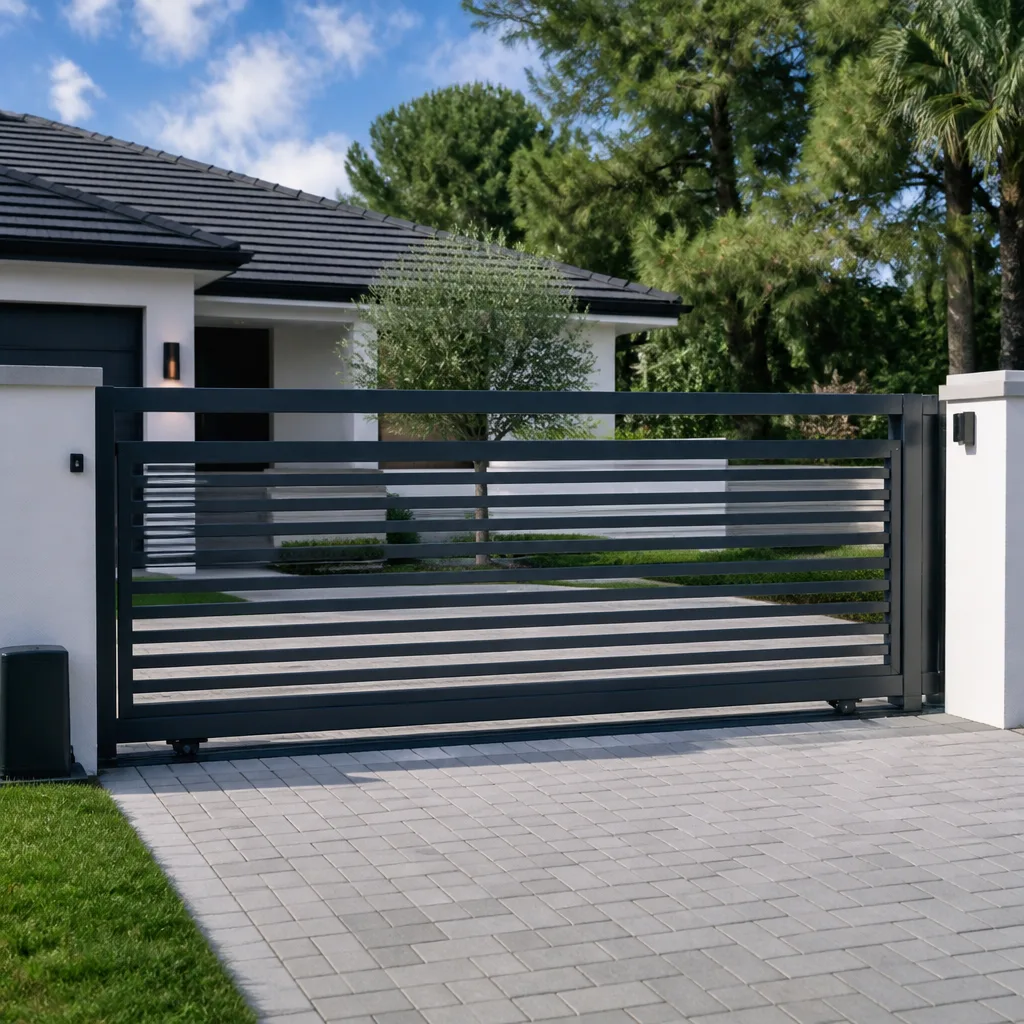
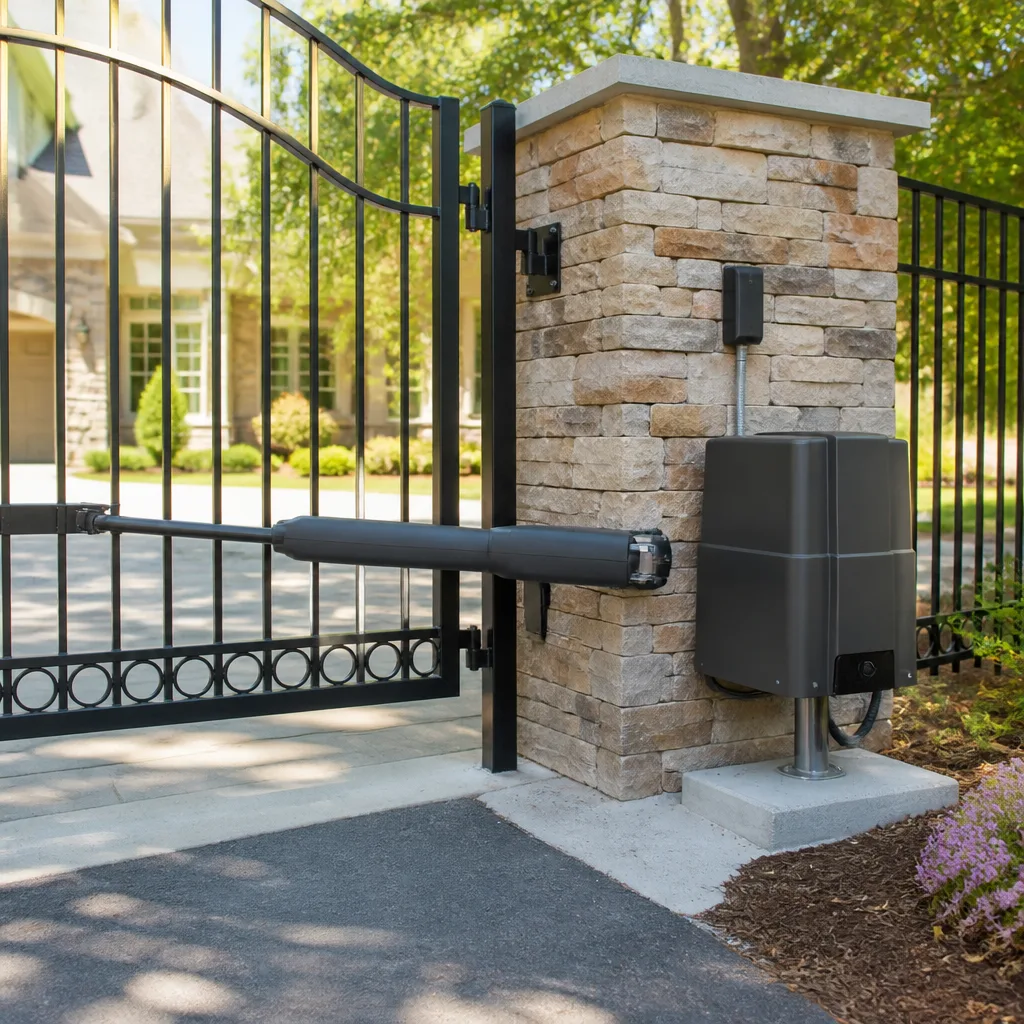
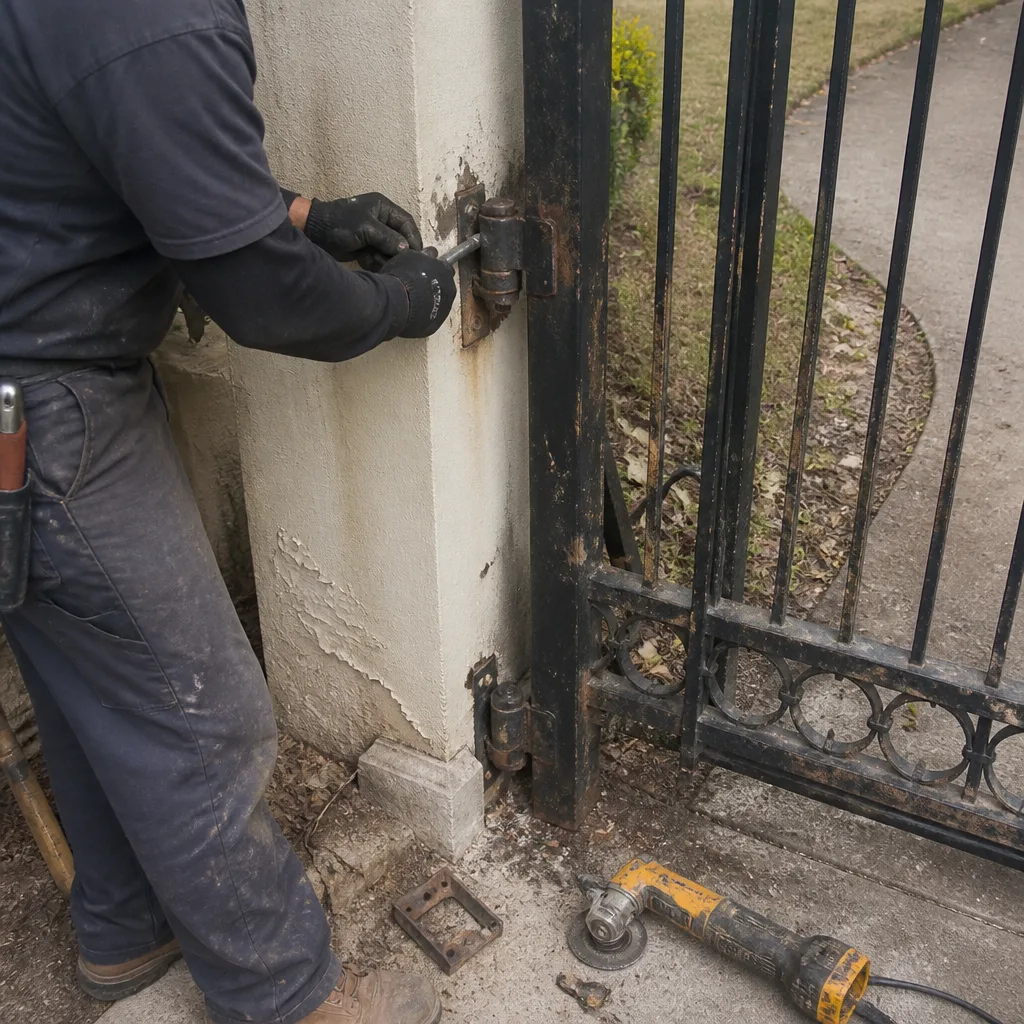 Before
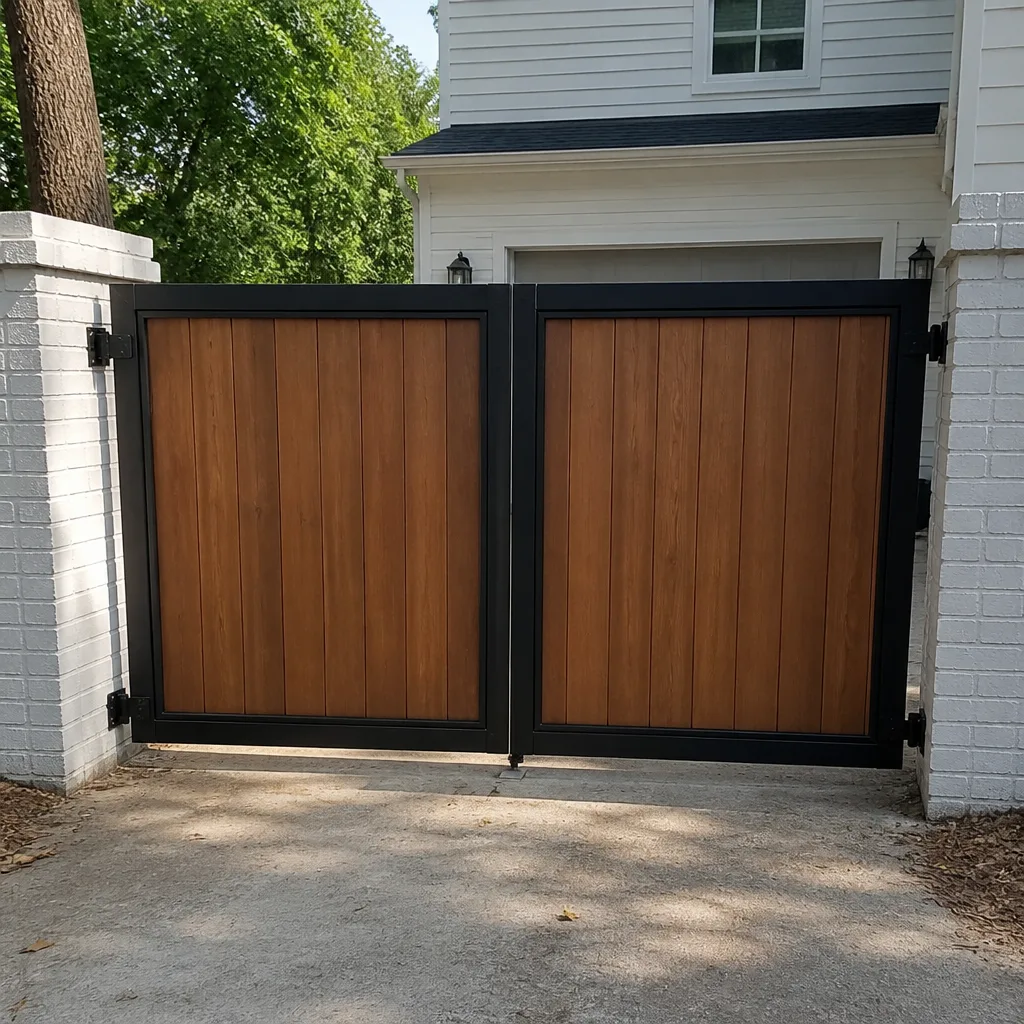 After
After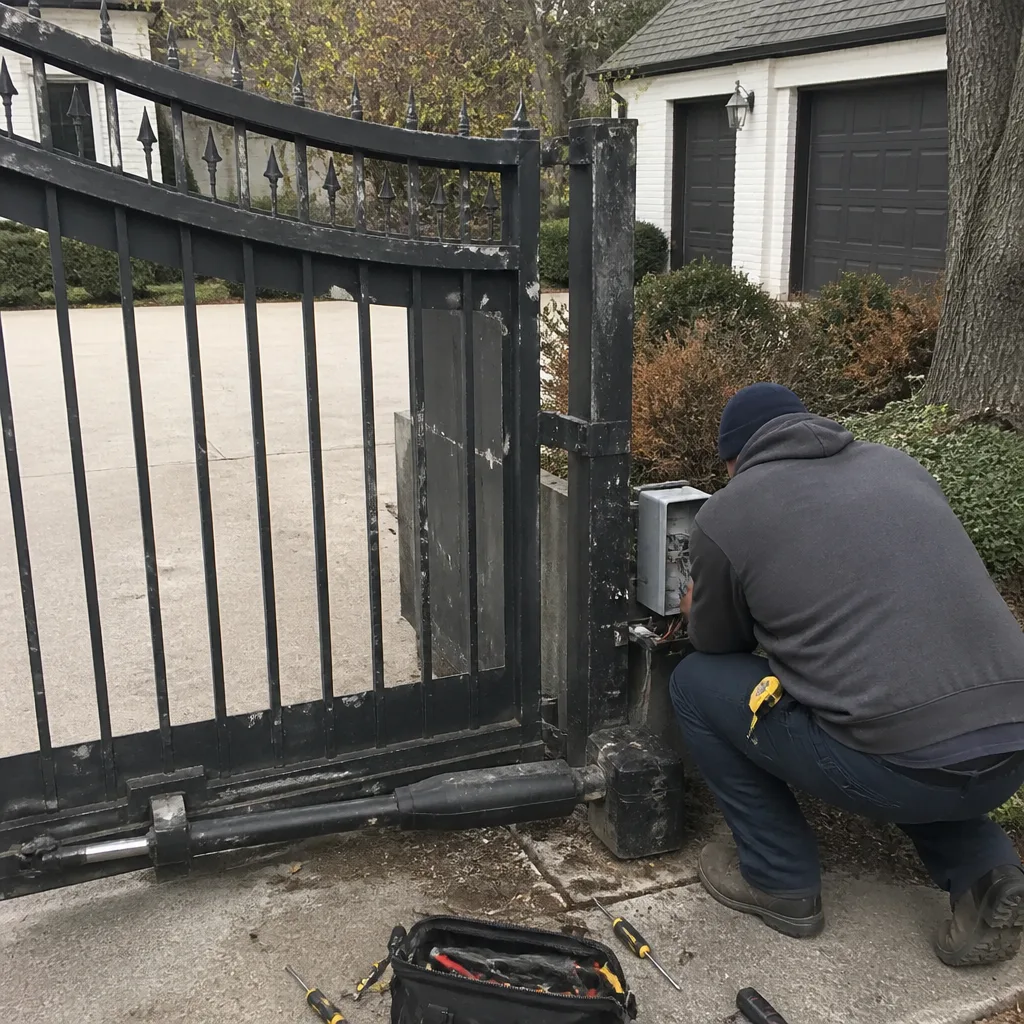 Before
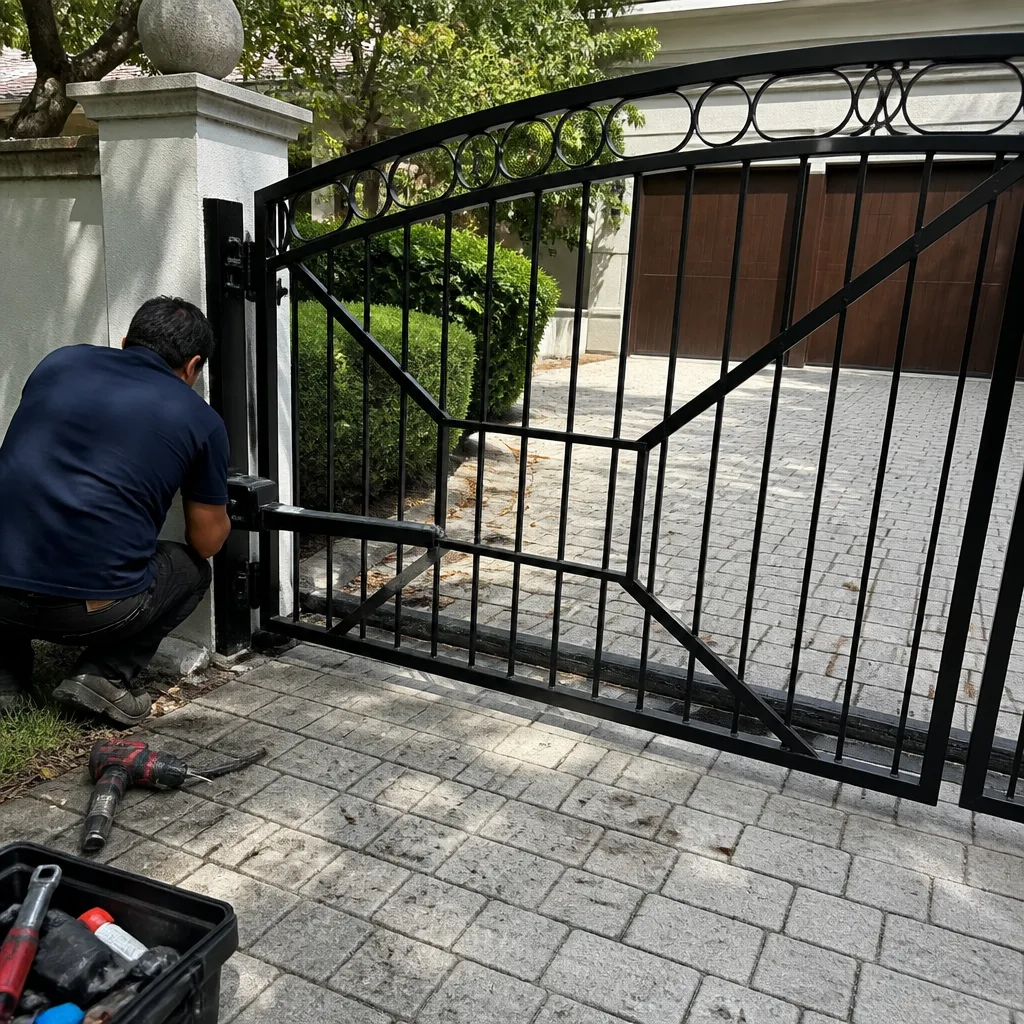 After
After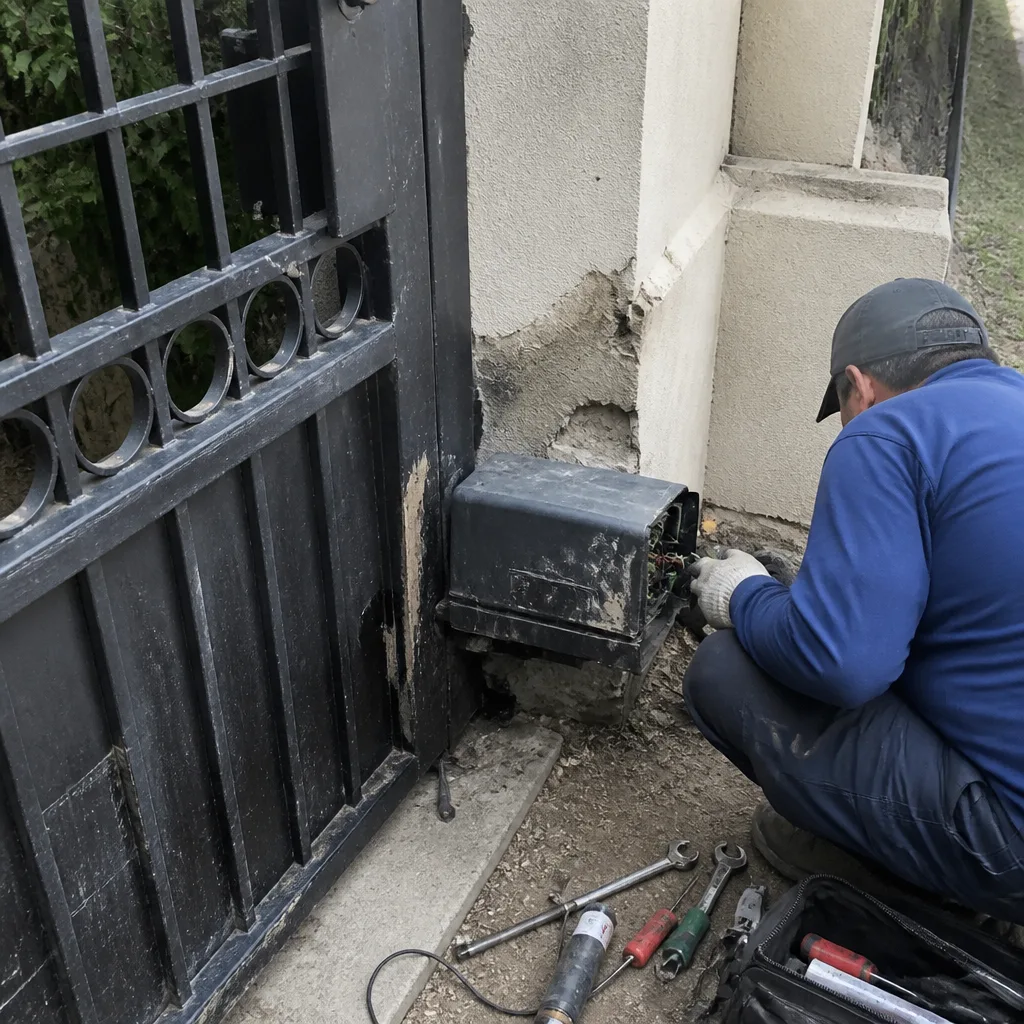 Before
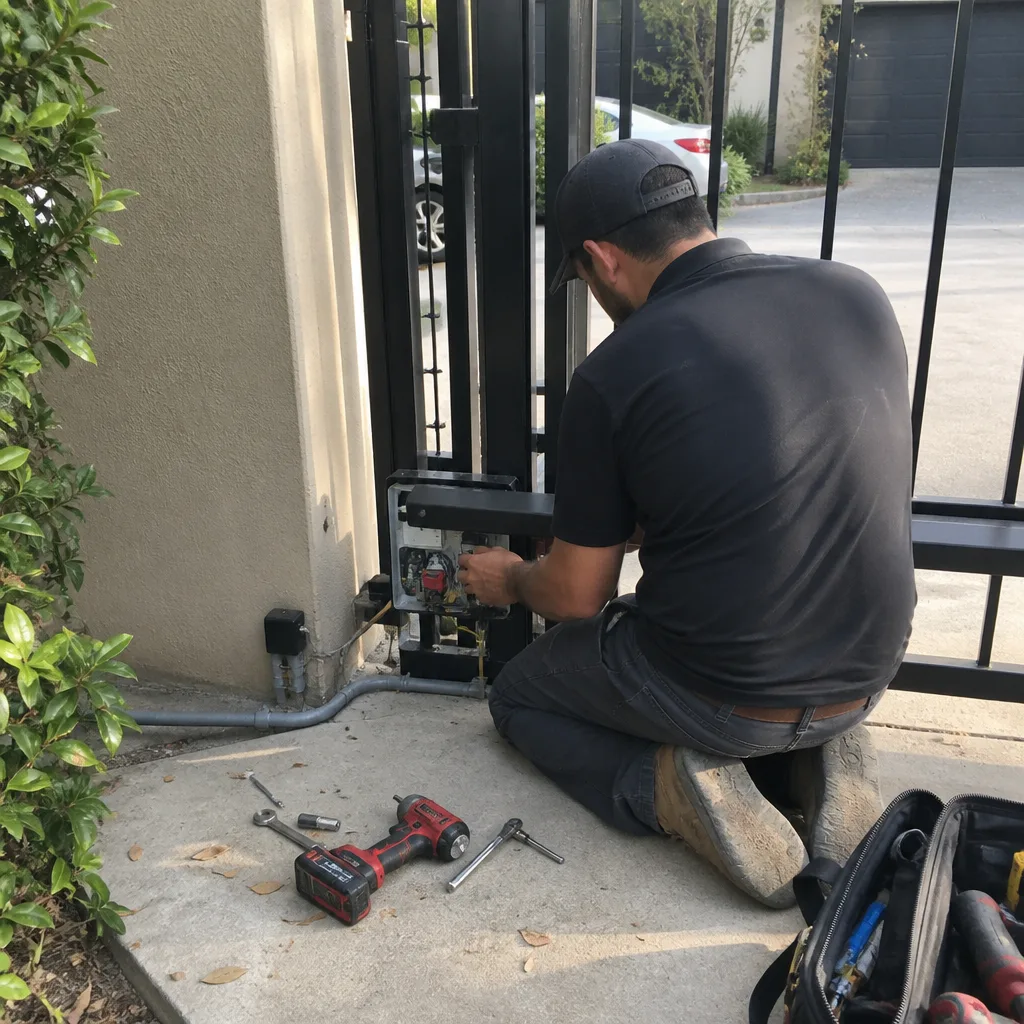 After
AfterGate Repair Permits, Codes & Inspections in TX: What You Need to Know
Most gate repairs in Texas don’t require a permit. But the line between a repair and an alteration is drawn in a very specific place, and stepping over it without the right paperwork can void a homeowner’s insurance claim or surface as a title defect when you try to sell. A Highland Park homeowner added an automatic operator to an existing gate three years ago. The gate worked fine. The problem showed up at closing, when the title company asked for a permit number that didn’t exist. The deal nearly died over a piece of paper that would have cost $75 and taken one trip to the municipal building to fix properly. This guide draws the actual line for you, so you’re not paying for permits you don’t need and not skipping the ones you do. For Gate Repair Warning Signs: A Highland Park Homeowner’s Reference Guide, see our dedicated resource.
Quick Answer
In Texas, routine gate repair work like replacing hinges, welding a cracked frame, or swapping a broken opener motor does not require a permit in most municipalities, including Highland Park. A permit is generally triggered when you alter the structure itself: pouring new footings, replacing a hinge post, widening the gate opening, or adding an automatic operator to a gate that never had one. The safe summary: repairs no, structural changes yes, and automated systems almost always worth a call to the local building department before you start.
Table of Contents
- Repair vs. Alteration: Where Texas Draws the Line
- Highland Park’s Rules on Top of Texas Code
- HOA Approval vs. Municipal Permit: What Each One Covers
- Automated Gates and Operators: The Permit You’re Most Likely to Miss
- How to Retroactively Permit Work a Previous Owner Did
- What Your Contractor’s Insurance Actually Covers When Work Was Unpermitted
- What Permits and Inspections Actually Cost in Texas
- Common Mistakes to Avoid
Repair vs. Alteration: Where Texas Draws the Line
Texas building code draws a practical distinction between maintaining something that already exists and changing what’s there. The rule of thumb runs like this: if the work puts the gate back into the condition it was originally approved for, it’s a repair. If the work changes the structure, the footprint, the power draw, or the way the gate operates, it’s an alteration, and alterations trigger permits.
Here’s where that line falls in the real world. Replacing a sagging hinge bracket is a repair. Replacing the post that bracket bolts to is an alteration, because the post is set in concrete and carries the structural load of the entire gate. Welding a crack in the steel frame is a repair. Cutting the frame apart to make the gate wider for a new truck is an alteration. Swapping a dead LiftMaster motor for a new LiftMaster motor is a repair. Adding a motor to a gate that was always hand-swing is an alteration with electrical and safety implications.
In our experience fixing gates in Highland Park, we see this confusion most often with post replacement. A gate sags in the hinge post, not in the middle. When that post rusts through or shifts, the fix is a new post in new concrete, and in most Texas jurisdictions that means a permit for concrete work and a structural inspection. The homeowner thinks they’re getting a repair. The building department thinks they’re getting a new structure. When those two definitions collide at resale time, the homeowner loses.
The practical test we give people: ask yourself whether the gate will look and function the same way it did when the house was originally permitted. Same posts, same footprint, same manual operation, same power draw. If the answer is yes, it’s a repair. If you changed any of those four things, spend fifteen minutes on the phone with the building department and find out what they want from you.
Highland Park’s Rules on Top of Texas Code
Highland Park is a small, incorporated town inside the Dallas metroplex with its own building inspection department and its own overlay of rules that sit on top of the Texas state code. That matters because Texas is a home-rule state for municipalities: what needs a permit in Dallas might not need one in an unincorporated county area, and what needs a permit in Highland Park might not need one in Dallas. You cannot take advice from a national forum post or even a contractor who works mostly in a different city and assume it applies to your address.
The Town of Highland Park is stricter than most surrounding municipalities about street-facing structures. Anything visible from the street, including gates, fences, and the posts that hold them, falls under the town’s zoning and aesthetic review process in addition to the building code. That means a gate replacement at the front of your property can require two approvals that run on different timelines: the building permit for the structure and the zoning sign-off for what’s visible from the curb. In our experience, the building side moves quickly. The zoning side moves at its own pace, and it does not care about your contractor’s schedule.
There’s also the question of the Town of Highland Park versus Highland Park the general Dallas-area reference. When most people say Highland Park, they mean the incorporated town. But addresses immediately adjacent, in University Park or Dallas proper, answer to different offices. We’ve seen people apply at the wrong counter and lose three weeks before anyone told them they were in the wrong building. Check your actual jurisdiction before you spend any time on paperwork.
For our customers in Highland Park specifically, we tell them this: street-facing gate work of any structural kind, plan on a permit. Backyard gate work that doesn’t change the footprint, probably not. But the town has a planning desk that will answer the question in one phone call, and that phone call is free.
HOA Approval vs. Municipal Permit: What Each One Covers
People mix these two up constantly, and they are not the same thing. A municipal permit is a legal document from the town that says your project meets building and zoning code. An HOA approval is a private agreement from your neighborhood association that says your project meets the deed restrictions you agreed to when you bought the house. One protects the public interest. The other protects property values and aesthetic consistency.
They bite at different times. A missing municipal permit bites you at resale, when a title search or a sharp buyer’s inspector asks for the paperwork. A missing HOA approval bites you earlier, when the association sends a violation letter and starts running up fines. In Highland Park, where HOA presence varies block by block, you can have two neighbors doing identical gate work, one required to get HOA sign-off and the other not.
The HOA covers what the gate looks like. Finish, height, style, whether it matches the neighborhood character, whether you can use a specific material like wrought iron versus aluminum. The town covers whether the gate is safe, structurally sound, and correctly placed relative to the property line and the right-of-way. You can have HOA approval and be out of code compliance, and you can have a permit and be in violation of your deed restrictions. They are two separate conversations with two separate authorities.
Practical steps if you need both:
- Start with the HOA. Their review is usually slower and their feedback is subjective. Find out what they’ll approve before you spend money on plans.
- Take the approved design to the building department. The town cares about engineering, setbacks, and power. The HOA’s approval doesn’t override the town’s requirements.
- Keep both documents in the folder where you keep your deed and your title insurance. You will need them when you sell.
- If the HOA and the town conflict on something, the town wins. A permit doesn’t shield you from an HOA fine, and an HOA approval doesn’t shield you from a code violation.
The homeowner in the opening story didn’t have an HOA problem. Their gate work was approved by the homeowner’s association quickly. The problem was the town permit, because the HOA approval letter made them think they were done with paperwork. They weren’t, and it took a retroactive permit application and an inspection to keep their sale alive.
Automated Gates and Operators: The Permit You’re Most Likely to Miss
This is the single most common permit gap we see in Texas gate work, and it’s not even close. A homeowner has a manual driveway gate. They decide they’re tired of getting in and out of the truck in the rain. They buy a Mighty Mule or a BFT operator kit, someone wires it up, and the gate slides open at the push of a button. No one ever thinks to ask the town because the gate was already there. The operator is just an accessory, right?
Wrong, from the code’s perspective. Adding an automatic operator changes the gate from a passive structure to an active machine with moving parts that can trap a child, damage a vehicle, or pin a delivery person. The Texas building code and the UL 325 safety standard that governs automated gates require photo eyes, safety edges, proper clutch or force settings, and warning signage. A new electrical circuit usually has to be run, and in Highland Park that means an electrical permit and an inspection. The fact that the kit came in a box from a big-box store does not change any of this.
The gate operator myth we hear most often is this: if it plugs into a wall outlet, it doesn’t need a permit. The code makes no such distinction. A plug-in operator is still an automated gate system, and the safety requirements apply exactly the same as if you’d hardwired it to a new breaker.
The inspection piece matters more than the permit fee. A Highland Park inspector checking an automated gate will verify that the safety reversing mechanism works, that the force setting doesn’t exceed the standard, and that the photo eyes are positioned correctly. If you skip the permit, you skip the inspection, and you’re the one who lives with the liability if that gate ever hurts someone. Your insurance company will ask whether the gate was permitted and inspected. When the answer is no, they’ll deny the claim.
Among the brands we service, LiftMaster, FAAC, BFT, and Mighty Mule all sell operator systems that are perfectly safe when installed to spec. The permit and inspection are not a reflection on the equipment. They’re the paper trail that proves the safety settings were verified by someone with no financial stake in the job.
How to Retroactively Permit Work a Previous Owner Did
This situation is more common than you’d think, especially right after a home purchase. The inspector’s report notes that the automatic gate at the driveway has no visible permit record. You call the town. The town has no file. Now what?
First, don’t panic. Retroactive permits exist precisely because municipal records are imperfect and previous owners are unreliable narrators. The process is not usually adversarial. The building department wants the structure to come into compliance more than it wants to punish you for someone else’s shortcut.
Here’s the general process in Highland Park and most Texas municipalities:
- Call the building department and ask whether a permit exists for your address and what the process is for an after-the-fact application. Use that phrase, after-the-fact, because that’s the term they’ll recognize.
- Expect an inspection of the existing work. The inspector will look at the gate structure, the operator safety features, and the electrical connection to see whether what’s there would pass if it were new construction.
- Correct whatever doesn’t pass. This is the part people don’t budget for. An older gate operator without photo eyes or a safety edge will need those added before the inspector signs off.
- Pay the permit fee, usually with a penalty multiplier for the after-the-fact filing. In most Texas municipalities the penalty is a percentage of the base fee, not a separate fine, but it does make the permit more expensive than it would have been originally.
There are times when retroactive permitting genuinely isn’t worth it. If the gate is a simple manual swing gate in the backyard, was clearly there for decades, and no one is raising the issue, spending time and money on an after-the-fact permit for work that predates you buying the house may not be necessary. If the title company isn’t asking, the insurer isn’t asking, and the town isn’t asking, you can often leave it alone.
There are also times when you have no real choice. If you’re selling the house and the buyer’s title company flags the gate, you’ll deal with it or the deal dies. If you’re filing an insurance claim related to the gate, the insurer will check the permit record as part of the claim review. And if the gate is street-facing and automated in Highland Park, the day will come when the town’s records catch up with it. Better to be ahead of that day.
What Your Contractor’s Insurance Actually Covers When Work Was Unpermitted
Most homeowners assume wrong about this. They believe that if a licensed contractor does the work, the contractor’s liability insurance covers any problem that comes from it, permit or no permit. That assumption is expensive.
A standard commercial general liability policy covers the contractor for bodily injury or property damage caused by the contractor’s work. The policy generally does not require permits as a condition of coverage. So far, so good. The problem is that the policy protects the contractor, not you. If your gate falls on your neighbor’s car, your neighbor’s claim goes against the contractor’s policy if the contractor’s negligence caused it. But if the gate fails because it was never inspected and you’re the one being sued, the contractor’s insurance doesn’t appear in your defense. You’re on your own, unless you can prove the contractor’s negligence and get them pulled into the claim.
And here’s the sharper edge: many contractor policies contain exclusions for work performed in knowing violation of building codes or permit requirements. If your contractor skipped a permit that was clearly required, and something goes wrong, the insurance company can argue that the loss arose from an excluded act. The contractor may be left personally exposed, which means you’re trying to collect from a person rather than a policy.
Your own homeowner’s insurance has its own view. Most policies require that permitted work be done with permits. If an unpermitted automatic gate injures someone on your property, your insurer may deny the liability claim or cancel the policy for material misrepresentation. The permit is the paper that keeps your own coverage intact.
So what do you actually do? Ask the contractor, in writing, whether the work requires a permit, and ask for the permit number when it’s pulled. If the contractor tells you no permit is needed, get that in writing. It does not guarantee coverage if you’re both wrong, but it does establish that you asked due diligence questions and relied on an expert’s answer. That’s frequently the difference between an insurer treating you as a victim and treating you as a co-conspirator.
What Permits and Inspections Actually Cost in Texas
Permit costs in Texas are modest compared to the cost of the gate work itself, which is why skipping one is such a bad trade. Here’s what you’re looking at in real numbers for Highland Park and comparable Texas municipalities.
- Building permit for gate post replacement or structural repair: $75 to $250, depending on the total project valuation. Small repair permits cluster at the low end.
- Electrical permit for a new gate operator circuit: $50 to $150. The electrical inspection is usually included or scheduled separately for a modest re-inspection fee.
- Zoning or aesthetic review for a street-facing gate: $100 to $500 in Highland Park, and the review timeline can be two to six weeks depending on the meeting calendar.
- After-the-fact penalty multiplier: typically 1.5x to 2x the base fee. An $80 permit becomes $120 to $160, not a catastrophe but an unnecessary surcharge.
- Professional plan drawings, if required: $200 to $1,000 for a gate project, depending on whether a licensed engineer or architect has to sign off. Most simple gate repairs don’t need engineered drawings, but a new automated driveway gate on a street-facing lot sometimes does.
For comparison, the gate work itself in Texas runs $400 to $1,500 for a post replacement, $800 to $2,500 for a new motor and operator installation, and $3,000 to $12,000 for a full new automated gate on a driveway. The permit is 2% to 5% of the project cost. There is no financially rational reason to skip it. People skip it because they don’t know it’s required, not because they did the math.
We also get asked whether a homeowner can pull the permit themselves when a contractor is doing the work. In Texas, yes, a homeowner can generally pull their own permit for work on their own property. But when you do that, you are accepting the role of the responsible party for code compliance, and you’re telling your insurance company that you are supervising the work. If you’re comfortable with that responsibility, fine. If you’re not, hire a licensed contractor who will pull the permit under their own name and carry the liability that comes with it. See How to Hire a Gate Repair Contractor in Highland Park: A Step-by-Step Guide for what to ask. That’s one reason Gatewood Fence & Gate pulls its own permits for structural and automated gate work in Highland Park and the surrounding area. The name on the permit should be the name on the work.
Common Mistakes to Avoid
- Assuming all gate work is repair work. Replacing a hinge post or adding an operator changes the structure or the power draw. In Highland Park, that’s an alteration, not a repair, and it needs the town’s sign-off.
- Stopping at HOA approval. Your HOA letter doesn’t satisfy the building department. Two different authorities, two different standards, and only one of them shows up in a title search.
- Thinking a plug-in opener dodges the permit. The code does not care whether the operator plugs into an outlet or is hardwired. An automated gate is an automated gate, and the safety inspection applies either way.
- Buying the operator first and checking the code later. Some operators on the market today don’t include the safety accessories that Highland Park requires for new installations. Better to know the code requirements before you spend money on equipment.
- Not asking who pulled the permit. If you hire a contractor who says they handle permits, ask for the permit number once it’s issued. A verbal promise is not a permit.
- Skipping the inspection on a retroactive permit. An after-the-fact permit isn’t a rubber stamp. The inspector still has to sign off on the actual work, and if it doesn’t meet current code, you’ll be paying to bring it up to standard before they do.
- Pulling your own permit without understanding the liability. A homeowner pulling their own permit becomes the code compliance party. If the gate operator hurts someone and the safety features were never inspected, that decision will be examined by your insurance company’s adjuster and possibly a jury.
When to Call a Professional
If your gate project involves an automatic operator, a new hinge post, a concrete pour, or anything visible from the street in Highland Park, stop by or call the building department and ask what they need. That conversation is free and usually takes ten minutes. If the answer is that you need a permit, and you’re not interested in becoming your own general contractor, call someone who does this for a living and will put their name on the paperwork. Gatewood Fence & Gate offers free estimates in Highland Park, and we can tell you in the first visit whether your project triggers a permit, an HOA review, both, or neither. When it does trigger one, we handle the permit application under our name and stand behind the work with the 90-Day Done Right Promise. Call (325) 936-1371 and we’ll lay out exactly what your project needs.
Frequently Asked Questions
Replacing a failed operator motor with a new one of the same type and power draw is a repair and does not require a permit in Highland Park or most other Texas towns. The line is crossed when you’re adding an operator to a gate that never had one, which means new electrical work and safety equipment, or when you’re changing the operator type and increasing the circuit load. If the replacement motor means a new circuit or a new safety system, you’re in permit territory. Call (325) 936-1371 if you’re not sure which side of that line your project is on, and we’ll tell you over the phone at no charge.
An after-the-fact permit for gate work in Highland Park typically costs 1.5x to 2x the base fee, which lands most projects between $120 and $400, plus any corrections required to bring the existing work into code compliance. The correction work is usually the larger expense, not the permit itself. The town will inspect the existing gate and list what needs to change before they sign off. Call us at (325) 936-1371 for an estimate on what the correction work would cost for your particular gate.
Your HOA can’t require a town permit, but it can require its own approval for the gate’s appearance, height, finish, and placement. The HOA’s authority comes from the deed restrictions you accepted when you bought the property, and it operates completely separately from the municipal building code. You may need HOA sign-off even when no town permit is required. The HOA can fine you for noncompliance even if the town would have approved the work with no paperwork at all.
Texas building code incorporates the UL 325 safety standard for automated gate systems, which requires photo eyes, force settings that reverse within the specified limits, and warning signage. When a permit is required for an automated gate installation, the inspection that comes with it verifies UL 325 compliance. When a permit is not required, no one is checking, and the burden is entirely on you and whoever installed the system to ensure the safety features are correct and functional.
Depending on the buyer’s lender and title company, the unpermitted gate can derail the sale at the closing table. Title companies in Texas increasingly verify permit records for visible exterior improvements, and an automated gate with no permit file is a red flag. You may be required to pursue a retroactive permit before closing, and if the gate doesn’t meet current code, you’ll pay to bring it up to standard or the buyer may walk away. The fix is usually cheaper and faster than the delay it causes if you deal with it before listing.
Yes. When your gate project in Highland Park requires a permit, we pull it under our name and carry the responsibility for code compliance on the work we perform. We handle the application, the inspection scheduling, and any corrections the inspector requires, and we stand behind the work with our 90-Day Done Right Promise in writing. Call (325) 936-1371 for a free estimate and we’ll tell you in the first visit what permits your project actually needs.
The Bottom Line
Gate permit rules in Texas are not as complicated as they’re made out to be, but they are specific, and getting them wrong costs more than getting them right. Repairs no, alterations yes. Manual gates rarely need permits. Automated gates frequently do, and that’s the one most homeowners miss. HOAs and municipalities are two different conversations, and only one of them follows you to the closing table. In Highland Park, street-facing gate work brings an extra layer of zoning review that your backyard gate doesn’t. When in doubt, one phone call to the town’s building department answers the question for free. Browse our more guides & resources for additional help. When the work does need a permit, putting a licensed professional’s name on the paperwork is the cheapest insurance you’ll ever buy.
We’re down the road, we’ve been at this since 2001, and we’re glad to walk you through exactly what your gate project needs before you spend a dollar on equipment. Call Gatewood Fence & Gate at (325) 936-1371, or stop by the shop, and you’ll get a straight answer and a free estimate. If you’d rather read up first, start with Gatewood Fence & Gate home to see how we work, or look at Gate Repair in Highland Park for specific repair details. If your project is a new build, Gate Installation in Highland Park walks through the process, and for anything with a motor on it, Gate Motor & Opener in Highland Park covers operators, safety systems, and wiring.
Written by Hal Gatewood, Owner at Gatewood Fence & Gate, serving Highland Park since 2001.